Colin P. Derdeyn, M.D.
|
| Program Director
Endovascular Surgical Neuroradiology (Interventional Neuroradiology Fellowship) Cerebrovascular Group
Interventional
Neuroradiology Service
NeuroVascular
Program
|
|
Bookmarks Biographical Sketch Dr. Derdeyn received both his BA (Echols Scholar Program, 1984) and MD (1988) from the University of Virginia. After a year as a intern in general surgery and a year as a resident in Neurological Surgery at the University of North Carolina, Chapel Hill, he became interested in the developing field of interventional neuroradiology. He completed a Radiology residency at the Mallinckrodt Institute of Radiology, Washington University School of Medicine, in 1994, where he served as Chief Resident his final year. This was followed by a year as a fellow in Diagnostic Neuroradiology at Mallinckrodt Insitute of Radiology. His final year of clinical training (1996) was spent gaining dedicated experience in neuro-endovascular techniques at the University of Wisconsin-Madison as a fellow in Interventional Neuroradiology. He is board certified in Radiology, with sub-specialty certification
in Neuroradiolgy. He is an active member of several professional cerebrovascular
and radiological societies. These include the American Society of Interventional
and Therapeutic Radiology, the American Society of Neuroradiology, the
Stroke Council of the American Heart Association (Fellow), and the Joint
Section on Cerebrovascular Surgery of the American Association of Neurological
Surgeons and the Congress of Neurological Surgeons. He is a frequent
ad hoc reviewer for several major journals and serves on the editorial
board of the American Journal of Neuroradiology. He currently serves
on the Executive Committee of the American Society of Interventional and
Therapeutic Neuroradiology.
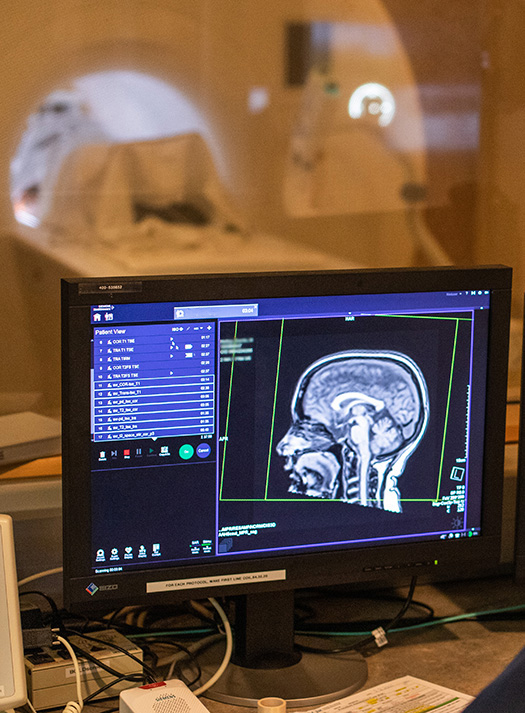
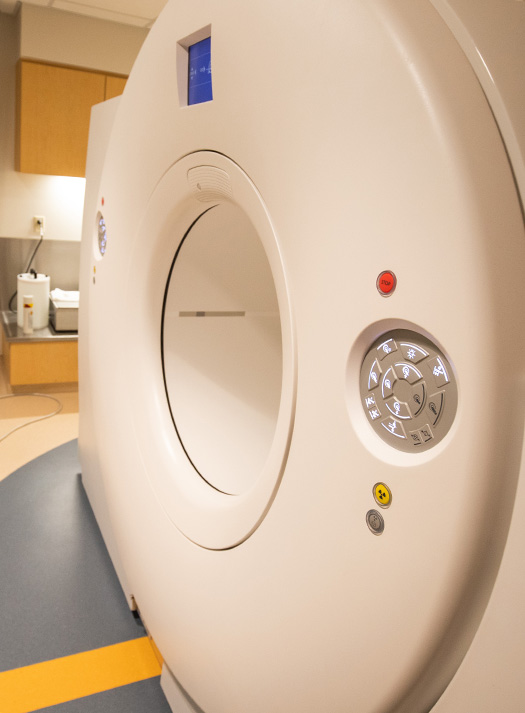
Research Summary The focus of my research is on cerebrovascular pathophysiology in general (diseases and disorders of the brain related to the blood vessels), and specifically, on cerebral hemodynamics and stroke. Severe hemodynamic impairment (reduced blood flow) may lead to stroke. This research primarily involves the use of a positron emission tomography (PET) scanner. PET uniquely allows the non-invasive measurement of cerebral blood flow and oxygen use (metabolism) in the brain. I am particularly interested in the responses of the brain blood vessels and the brain itself to reduced pressure in the arteries. Current projects include a study of the effects of angioplasty of cerebral vessels on blood flow and oxygen use. Another NIH-funded project currently underway is a study of the effects of medical therapy on cerebral blood flow and metabolism in patients with atherosclerotic disease. We have recently started a NIH-funded trial of surgical bypass for completely occluded carotid arteries, using PET to determine whether patients are suitable candidates. In addition to the PET research, other areas of inquiry include the development of MR techniques to provide similar non invasive physiologic measurements as PET. This includes measurements of cerebral blood flow and blood volume, as well as a method to measure relative oxygen use in patients with cerebrovascular disease. The ultimate aim of all these efforts is to develop better therapies
to reduce the risk of stroke in patients with cerebrovascular disease.
Bibliography (pubmed search for all articles)
Contacts email: derdeync@mir.wustl.edu |
| I.N. Home |
For
Patients & Docs | Research
| Angiograms & PET Images
Neuroradiology Section | MIR | WUSM | BJC Health System | Contact Us |